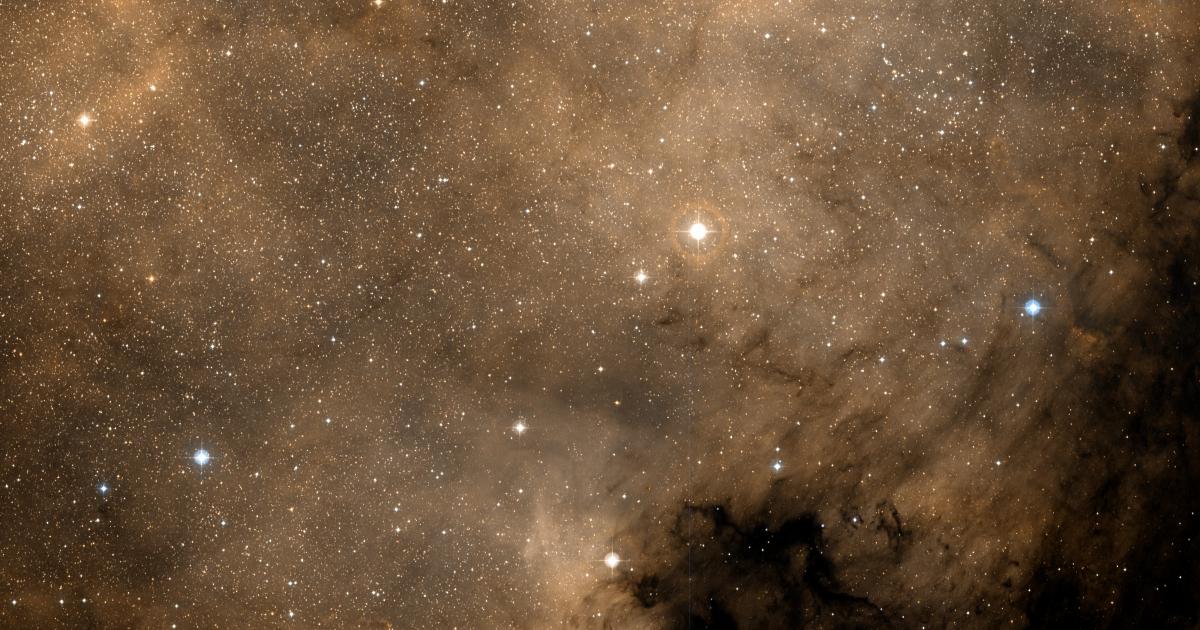
On any clear summer night in the northern hemisphere, look overhead and you'll find it — a large cross-shaped pattern of stars stretching across the densest part of the Milky Way. That's Cygnus, the Swan, one of the most rewarding constellations in the summer sky and home to some of the most remarkable stars and deep-sky objects visible from Earth.
Finding Cygnus in the Sky
Cygnus is best found by starting with the Summer Triangle — the three bright stars Vega, Deneb, and Altair that dominate the overhead sky from June through October. Deneb is the star at the top of the triangle, and it marks the tail of Cygnus. From Deneb, the constellation extends southward in a long cross shape, with wings stretching out to either side and the star Albireo at the very tip of the swan's beak at the southern end.
This cross shape is so distinctive that Cygnus is often called the Northern Cross — particularly in winter, when it stands upright on the northwestern horizon after sunset. In summer, it lies flat overhead, and the Milky Way runs directly through its center, making it one of the best constellations to sweep with binoculars on a dark night.
Cygnus is best observed from June through November, when it rises high in the northern sky. It's circumpolar from latitudes above about 35 degrees north, meaning it never fully sets below the horizon.
Deneb — The Most Luminous Star You Can See
Deneb marks the tail of the Swan and is one of the most extraordinary stars in the night sky. It appears as a bright but unremarkable white star — the 19th brightest in the sky — yet its apparent dimness is deeply misleading. Deneb is somewhere between 1,400 and 2,600 light years from Earth, estimates varying because measuring distances to supergiant stars is genuinely difficult. At that distance, appearing as bright as it does, Deneb must be producing somewhere between 100,000 and 200,000 times the total energy output of the Sun.
If Deneb were as close to us as Vega — just 25 light years away — it would be bright enough to cast shadows at night and visible in broad daylight. Instead it sits quietly at the top of the Summer Triangle, looking like just another bright star. It is one of the most luminous objects in the entire galaxy visible to the naked eye.
Albireo — The Most Beautiful Double Star
At the opposite end of Cygnus from Deneb sits Albireo, the star at the swan's beak. Through a telescope or even a steady pair of binoculars, it reveals itself as one of the most striking double stars in the sky — a close pair in which one star is distinctly golden-orange and the other is vivid blue. The color contrast is so pronounced and so beautiful that Albireo is a staple target for amateur astronomers and anyone seeing a telescope for the first time.
Whether the two stars are physically bound to each other or simply appear close from our vantage point is still debated — their distance from each other is enormous and their orbital period, if they are bound, would be extraordinarily long. But from Earth, the view is the same either way.
The Milky Way Through Cygnus
Cygnus sits at one of the richest stretches of the Milky Way visible from the northern hemisphere. Looking toward Cygnus on a dark night is looking along one of the galaxy's inner spiral arms — the same arm our solar system sits within. The result is a dense band of stars, nebulae, and star clusters that runs directly through the constellation, making it one of the best regions of the sky for wide-field observation.
The North America Nebula, NGC 7000, lies just east of Deneb and is large enough to cover several times the area of the full Moon. Its shape genuinely resembles the North American continent, particularly with a dark nebula forming the Gulf of Mexico. Under dark skies it's faintly visible to the naked eye; in photographs it's one of the most dramatic objects in the summer sky.
The Cygnus Wall — a ridge of glowing gas within the North America Nebula — is one of the most active star-forming regions within a few thousand light years of Earth. New stars are igniting there right now.
Cygnus X-1 — A Black Hole in the Swan
Hidden in Cygnus is one of the most studied objects in the history of astronomy. Cygnus X-1 is a powerful X-ray source that was among the first objects to be identified as a black hole candidate, back in the 1970s. It consists of a stellar-mass black hole — about 21 times the mass of the Sun — in a tight orbit with a blue supergiant companion star, pulling material from it in a swirling disk that radiates intensely in X-rays.
It's invisible to the naked eye and invisible even optically without knowing exactly where to look. But it's there, embedded in the same stretch of sky you can take in with a glance overhead on a summer night.
The Mythology of Cygnus
The swan in the sky has been identified with several figures in Greek mythology. One common version identifies Cygnus with Zeus, who transformed himself into a swan. Another connects it to Orpheus, the legendary musician, who was transformed into a swan after his death and placed in the sky near his lyre — Lyra, which sits just to the west of Cygnus. A third version identifies the swan as the ill-fated Phaethon, whose friend Cycnus mourned so deeply at his death that the gods took pity and transformed him into a swan.
The constellation appears in the records of ancient Babylon and was catalogued by Ptolemy in the 2nd century CE. It has been a continuous presence in Western star maps ever since.
Name a real catalogued star in Cygnus or any of our 30 curated constellations →