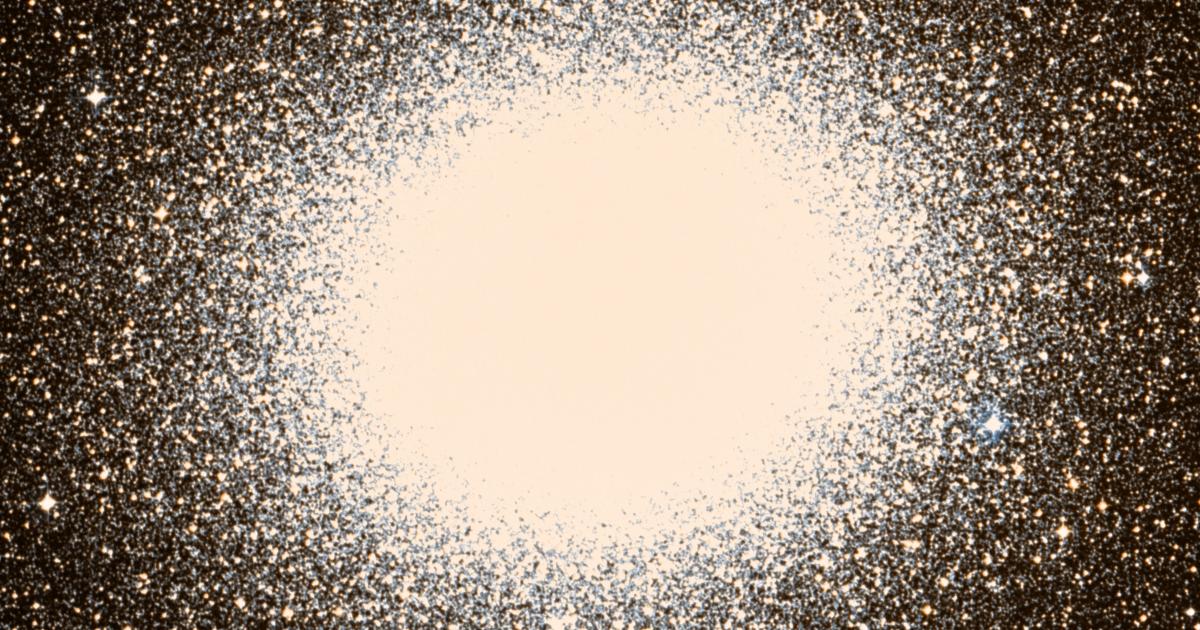
The night sky looks like a uniform scattering of white points, but the stars up there are wildly different from one another. They range from cool red dwarfs barely larger than a planet to blue supergiants hundreds of times the size of the Sun. Astronomers classify them in several ways — by temperature and color, by size, and by where they are in their life cycle. Here's how it all fits together.
Classification by Temperature and Color
The most fundamental way astronomers categorize stars is by their surface temperature, which also determines their color. This system is called spectral classification, and it uses the letters O, B, A, F, G, K, and M — running from the hottest to the coolest.
O-type stars are the hottest and rarest stars in the galaxy, burning at surface temperatures above 30,000 Kelvin. They appear blue-white, shine with extraordinary luminosity, and are so massive that they burn through their fuel in just a few million years — a blink of an eye on astronomical timescales.
B-type stars are blue-white and extremely luminous, though slightly cooler than O-types. The belt stars of Orion — Alnitak, Alnilam, and Mintaka — are all B-type supergiants. Rigel, one of the brightest stars in the night sky, is a B-type supergiant burning roughly 120,000 times brighter than the Sun.
A-type stars are white to blue-white, with surface temperatures between about 7,500 and 10,000 Kelvin. Vega, one of the three stars of the Summer Triangle, is a classic A-type star. So is Sirius, the brightest star in the night sky. A-type stars are the brightest class that commonly appears white to the naked eye.
F-type stars are yellow-white, slightly hotter than the Sun. Procyon, one of the closest bright stars to Earth, is a well-known F-type star. This class spans the transition from the hotter blue-white stars to the more familiar yellow range.
G-type stars are yellow, with surface temperatures between about 5,200 and 6,000 Kelvin. The Sun is a G-type star — sometimes called a yellow dwarf — and is considered the template for this class. Alpha Centauri A, the closest sun-like star to Earth, is also a G-type.
K-type stars are orange, cooler than the Sun but still capable of supporting stable planetary systems for far longer than our own star will survive. Arcturus, the brightest star in the northern hemisphere, is a K-type giant. K-type stars are increasingly of interest to astronomers searching for potentially habitable planets because of their long lifespans and relative stability.
M-type stars are the coolest, reddest, and by far the most numerous stars in the galaxy. They burn slowly and live for tens to hundreds of billions of years — far longer than the current age of the universe. The nearest star to Earth, Proxima Centauri, is an M-type red dwarf. Despite being so common, most M-type stars are invisible to the naked eye because of their low luminosity.
Classification by Size and Life Stage
Stars don't stay the same throughout their lives, and their size changes dramatically as they age. Astronomers use a second classification system that describes where a star is in its life cycle.
Main sequence stars are stars in the stable, hydrogen-burning phase of their lives — the longest period in a star's existence. The Sun has been a main sequence star for about 4.6 billion years and will remain one for another five billion. Most stars you can see with the naked eye are main sequence stars. They're sometimes called dwarf stars, though that term can be misleading — a main sequence O-type star is anything but small.
Giant stars are stars that have exhausted the hydrogen in their cores and expanded dramatically as they age. A red giant can be tens to hundreds of times the diameter of the Sun, even though its surface is cooler — which is why it appears red or orange. Arcturus and Aldebaran are red giants. Our own Sun will eventually become a red giant, expanding to engulf the inner planets.
Supergiant stars are the largest and most luminous stars in existence. They're the evolved form of the most massive main sequence stars. Betelgeuse, the distinctive reddish star in Orion's shoulder, is a red supergiant so enormous that if placed at the center of our solar system, it would extend past the orbit of Jupiter. These stars live violently short lives and end in supernova explosions.
White dwarfs are the dense remnants left behind after a sun-like star exhausts its fuel and sheds its outer layers. A white dwarf contains roughly the mass of the Sun compressed into a sphere about the size of Earth. They cool slowly over billions of years, producing no new energy — just radiating away the heat they've stored. The vast majority of stars, including our own Sun, will end their lives as white dwarfs.
Neutron stars are the extraordinarily dense remnants of massive stars that ended in supernova explosions. A neutron star typically packs more mass than the Sun into a sphere roughly 20 kilometers across — about the size of a city. Some neutron stars rotate hundreds of times per second, emitting beams of radiation that sweep past Earth like a lighthouse: these are called pulsars.
Other Notable Types
Variable stars are stars whose brightness changes over time, either because of physical pulsations in the star itself or because of an orbiting companion that periodically blocks its light. Some variable stars are used as distance markers by astronomers because their pulsation period is directly related to their luminosity.
Binary stars are pairs of stars gravitationally bound to each other, orbiting a shared center of mass. Roughly half of all sun-like stars are thought to have a companion — making binary and multiple star systems far more common than single stars like our own Sun.
Every Star in the NamedLight Registry
Every star available to name through NamedLight is a real catalogued object drawn from the HYG Stellar Database — with a spectral type, a measured brightness, and a verified position in the sky. The star on your certificate is one specific point in this enormous variety: a particular temperature, a particular color, a particular place in its own life story.