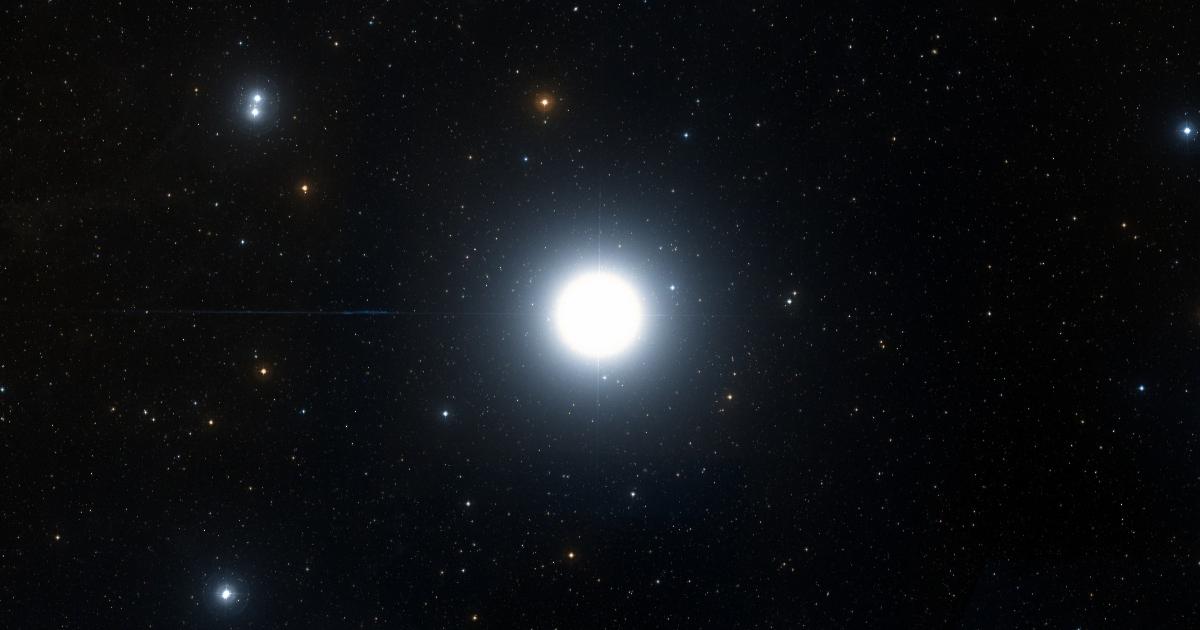
Of all the constellations in the northern sky, few carry the weight of Lyra. It is small — one of the smaller constellations visible from the northern hemisphere — and yet it contains one of the brightest stars in the night sky, one of the most studied dying stars in all of astronomy, and one of the oldest stories humanity has ever told.
Lyra is the harp. And the story behind it is one of love, loss, and the limits of what even the greatest gifts can overcome.
The Mythology of Lyra
The constellation represents the lyre of Orpheus — the musician of Greek mythology whose talent was so extraordinary that rivers stopped flowing to listen, and stones wept when he played.
When his wife Eurydice died from a snakebite on their wedding day, Orpheus did what no mortal had done before: he descended into the Underworld to bring her back. His music moved Hades himself, who agreed to release Eurydice on one condition — Orpheus must walk ahead of her and not look back until they reached the surface.
He almost made it. At the last moment, uncertain whether she was still behind him, he turned. Eurydice was pulled back into the darkness, and Orpheus lost her a second time.
After his death, Zeus placed his lyre among the stars. It has been there ever since.
Finding Lyra in the Night Sky
Lyra is visible from the northern hemisphere from spring through autumn, reaching its highest point in the sky during summer. It sits just east of Hercules and north of Aquila.
The easiest way to find it is to start with Vega — one of the brightest stars in the entire night sky and essentially impossible to miss on a clear night. Vega is the brightest point in a small, compact grouping of stars. That grouping is Lyra.
The constellation forms a small parallelogram of dimmer stars below Vega, giving it a rough lyre shape when you know what you're looking for. Lyra is also one corner of the Summer Triangle — the large asterism formed by Vega in Lyra, Deneb in Cygnus, and Altair in Aquila. The Summer Triangle is one of the most useful landmarks in the summer sky and visible even from moderately light-polluted areas.
The Stars of Lyra
Vega
Vega is the fifth brightest star in the night sky and the brightest in the northern celestial hemisphere. It sits approximately 25 light years from Earth, which means the light you see tonight left the star around the year 2000.
Vega has played an outsized role in human history. For thousands of years it served as the North Star — the pole star — due to the slow wobble of Earth's axis called axial precession. It will be the North Star again in approximately 12,000 years.
In modern astronomy, Vega was the first star other than the Sun to be photographed, in 1850. Its spectrum became the baseline from which astronomers measure the brightness and color of all other stars. It is, in a very real sense, the star by which all other stars are calibrated.
Epsilon Lyrae — The Double Double
Northeast of Vega sits Epsilon Lyrae, one of the most famous multiple star systems in the sky. To the naked eye it appears as a single point of light. Binoculars reveal two stars. A telescope shows that each of those is itself a pair — four stars in total, two binary pairs orbiting each other across an enormous distance. It's one of the most striking demonstrations of how much complexity hides behind a single point of light.
M57 — The Ring Nebula
Between the two southern stars of Lyra's parallelogram lies one of the most iconic objects in the night sky: the Ring Nebula. It is the remnant of a star that died roughly 6,000 years ago, its outer layers expelled into space in a glowing shell of gas, the stellar core left behind as a white dwarf at the center.
The Ring Nebula is a preview of what happens when a star like our Sun reaches the end of its life. It is approximately one light year across, and even a modest amateur telescope reveals its distinctive smoke-ring shape. For a small constellation, Lyra contains a remarkable amount to look at.
A Constellation Worth Knowing
There's something fitting about Lyra's place in the sky. The constellation commemorates a love story that ended in grief and irreversible loss — and yet it has been visible every summer for thousands of years. The myth endures because the star endures.
That's the nature of the sky. It holds things long after we're gone. If you'd like to name a star within Lyra — or any other constellation — NamedLight lets you register a real catalogued star with verified astronomical coordinates.