If you've searched for a star naming service, you've probably encountered a handful of options — some well-established, some newer, some that are hard to evaluate from the outside. This post is an honest look at what distinguishes one service from another and what's actually worth paying attention to before you buy. We'll also explain how NamedLight approaches each of these things so you can decide for yourself.
The Biggest Name in the Category: International Star Registry
International Star Registry has been around since 1979 and has named stars for over three million customers. It's the oldest and most recognized service in the category, and that longevity counts for something. Their star names are recorded in a published book called "Your Place in the Cosmos," which has been registered with the US Copyright Office across eleven volumes. If having your star's name appear in a physical published book matters to you, ISR is the only service that offers that.
Their printed packages start at $59 for a certificate and star chart, and go up to $189.95 for a fully framed certificate and framed star chart. A digital-only package is available at $29.95. They offer 88 constellation choices — all of them — which is a wider selection than most services provide.
The trade-off is that the sky chart included in ISR packages is an illustrated star map, not a photographic image of the actual sky. And the data behind each star registration isn't publicly detailed in the way that some newer services provide.
What to Look For in Any Star Naming Service
Regardless of which service you choose, a few questions are worth asking before you commit.
Where do the stars come from? A legitimate service should be able to tell you exactly which astronomical database its stars are drawn from — not just "a star catalog," but a specific, verifiable one. The HYG Stellar Database, the Hipparcos Catalogue, the Yale Bright Star Catalog — these are real, well-documented sources. If a service is vague about this, that's worth noting.
Is each star assigned uniquely? The same star should never be registered to two different customers. This is either built into the system or it isn't. Ask, or look for documentation that the service addresses it directly.
What does the sky chart actually show? Some services include illustrated star maps — algorithmically generated charts showing constellation patterns. Others provide real photographic data from telescope surveys. These are meaningfully different things, and it's worth knowing which you're getting.
What does the registration actually cost? Look at the all-in price for a physical package, not just the starting digital price. Shipping, framing, and add-ons can significantly change the total.
Is there an ongoing fee? Some services include a registry page that requires renewal. Others are permanent at the point of purchase. Make sure you know which you're signing up for.
How NamedLight Approaches These Questions
NamedLight draws every star from the HYG Stellar Database — a catalog of roughly 119,000 real stars compiled from the Hipparcos satellite mission, the Yale Bright Star Catalog, and the Gliese Catalog of Nearby Stars. Every star comes with verified coordinates, a measured brightness, and a calculated distance from Earth. Stars with existing proper names are excluded entirely — only unnamed catalogued stars are available.
Each star is assigned once and permanently removed from the available pool. It can never be registered to another customer.
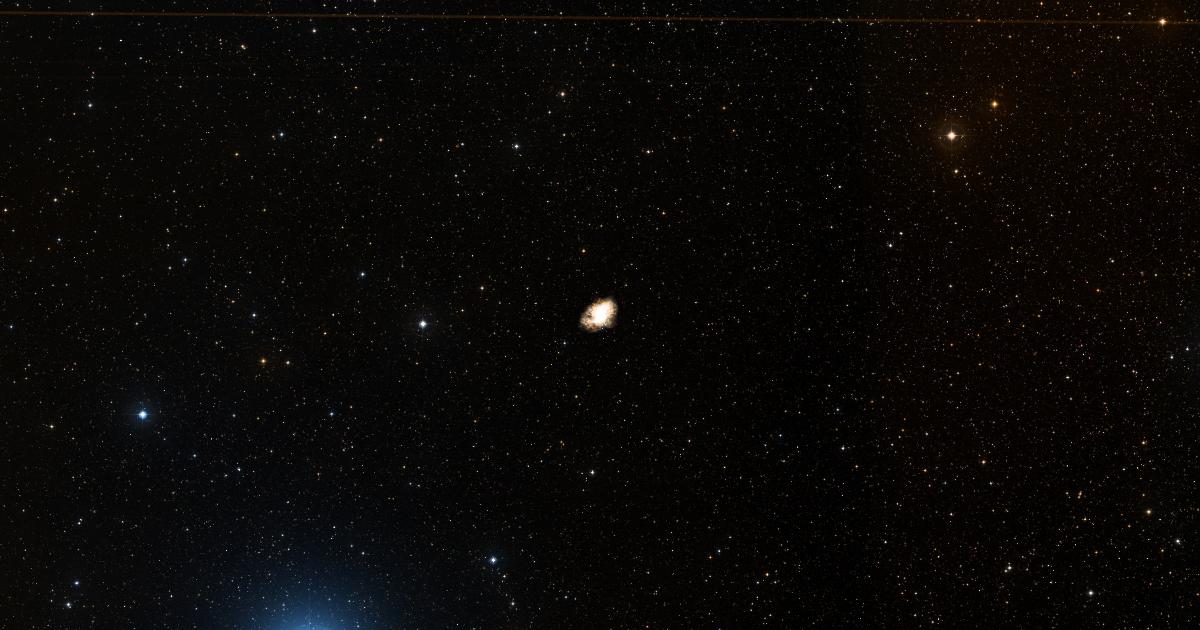
The sky chart on every NamedLight registry page is a real photographic image pulled from the Digitized Sky Survey — a professional archive of the entire sky captured by ground-based telescopes over several decades, maintained by the Space Telescope Science Institute and the European Southern Observatory. It's not an illustration. It's a photograph of the actual region of sky where your star is located, centered on its exact coordinates.
Pricing for a physical package starts at $29.99 with free US shipping. There are no ongoing fees — the registry page is permanent at the point of purchase.
The One Thing Every Service Agrees On
No commercial star naming service — including NamedLight and International Star Registry — is recognized by the International Astronomical Union, the official scientific body responsible for naming stars. The best services are transparent about this. The names are personal and commemorative, not scientific designations. The star is real. The sentiment is real. The official recognition isn't, and any service that implies otherwise is worth approaching carefully.
That's the most important thing to understand going in. Once you have it, the choice between services comes down to what matters most to you: longevity and a published book, or real astronomical data and a photographic sky chart. Both are legitimate options. They're just answering the question differently.