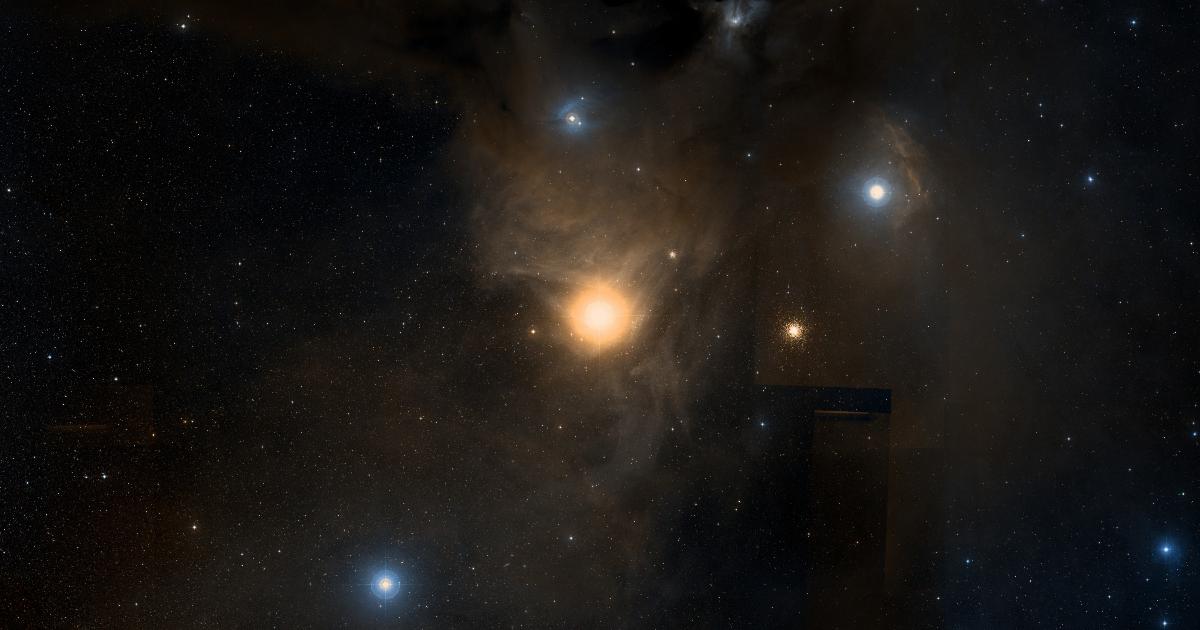
Most constellations require imagination. You look at the stars, you squint, you tilt your head, and eventually you can sort of see a bear or a hunter if you've already been told to look for one. Scorpius is different. The long curving tail, the raised claws, the brilliant red heart — it actually looks like a scorpion. On a clear summer night, low in the southern sky, it's one of the most immediately recognizable shapes in all of astronomy.
It's also one of the richest. Scorpius sits against the densest part of the Milky Way, which means its star fields are crowded and spectacular. And at its heart burns one of the most extraordinary stars in the night sky.
The Mythology of Scorpius
The myth of Scorpius is inseparable from the myth of Orion. In Greek mythology, Orion was the greatest hunter who ever lived — and his boast that he would kill every animal on Earth reached the goddess Gaia, protector of the natural world. She sent a scorpion to stop him. The two fought, and both were killed.
Zeus placed them both in the sky, but on opposite sides of the celestial sphere — a deliberate separation. Scorpius rises in the east just as Orion sets in the west. They never share the sky at the same time. The chase continues forever, in opposite directions, and neither ever catches the other.
It's one of the more elegant pieces of mythological astronomy: the positions of the constellations aren't incidental. They're part of the story.
Finding Scorpius in the Night Sky
Scorpius is a southern constellation, best seen from May through August in the northern hemisphere. It never rises very high above the southern horizon for observers at mid-northern latitudes — the further south you are, the better the view. From the southern hemisphere, it climbs high overhead and is one of the most spectacular sights in the sky.
The easiest entry point is Antares — a brilliant, distinctly reddish-orange star that is impossible to miss on a clear summer night. Antares sits at the heart of the scorpion, and from there the constellation fans out in both directions: the claws reaching toward Libra to the northwest, and the long curved tail sweeping down and east, ending in a tight stinger of stars.
The tail is what makes Scorpius so recognizable. It actually curves — a graceful arc of stars that traces the shape of a real scorpion's tail with unusual fidelity.
The Stars of Scorpius
Antares
Antares is the heart of Scorpius and one of the most remarkable stars in the night sky. Its name means "rival of Mars" — a reference to its striking reddish-orange color, which so closely matches the color of the planet that ancient observers named the star in relation to it.
It is a red supergiant of enormous scale — if it replaced the Sun at the center of our solar system, its surface would extend past the orbit of Jupiter. It sits approximately 550 light years from Earth and burns at a luminosity roughly 100,000 times that of the Sun. Like Betelgeuse in Orion, Antares is a dying star — it will end its life in a supernova at some point in the astronomically near future, briefly outshining everything in the night sky except the Moon.
Shaula and Lesath — The Stinger
The tip of Scorpius's tail is marked by two closely paired stars — Shaula and Lesath — known collectively as the stinger. They appear side by side to the naked eye and together form one of the most visually satisfying details in the constellation. Shaula is the brighter of the two and one of the brightest stars in Scorpius overall.
Graffias and Dschubba — The Claws
The claws of Scorpius — the stars reaching toward Libra — include Graffias, a bright multiple star system, and Dschubba, whose name derives from the Arabic for "forehead of the scorpion." Both are hot blue-white stars quite different in character from the warm orange of Antares at the center.
The Deep Sky Objects of Scorpius
Because Scorpius sits against the core of the Milky Way, it contains some of the most spectacular deep sky objects visible with binoculars or a small telescope. The globular clusters M4 and M80 sit close to Antares — M4 in particular is one of the nearest globular clusters to Earth and one of the easiest to resolve into individual stars with modest equipment. The open clusters M6 and M7 in the tail are both visible to the naked eye and stunning through binoculars.
A Constellation Worth the Wait
Scorpius rewards patience. In late spring it begins to clear the southeastern horizon after midnight. By midsummer it's well-placed in the evening sky, low in the south, its curve tracing the edge of the galaxy's densest star fields. For observers in the southern United States or further south, it's one of the most accessible and visually impressive constellations in the year.
Find Antares first. Everything else follows from there.
Name a star in Scorpius or any constellation at NamedLight →