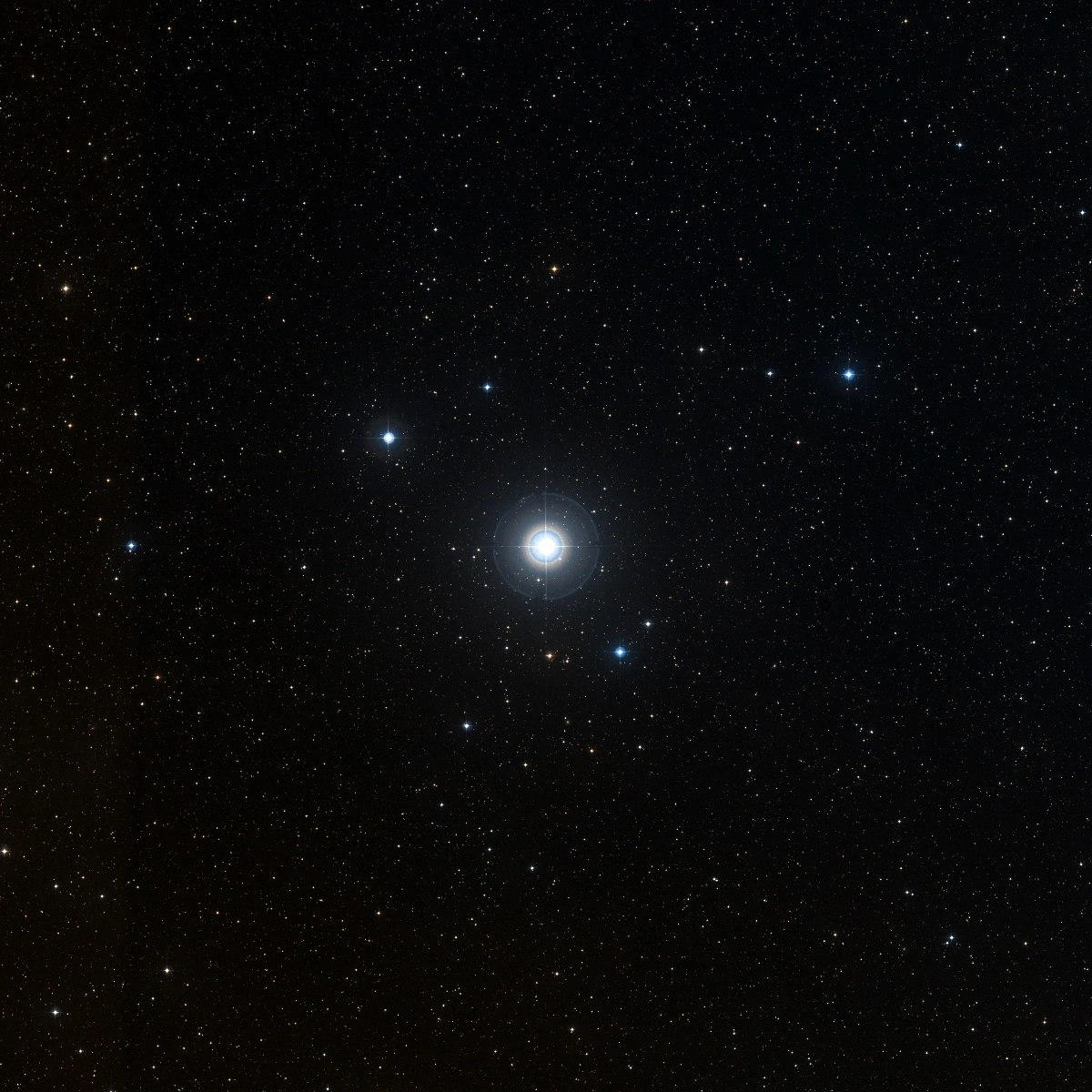
As summer fades and autumn settles in, a new landmark takes over the overhead sky. The Great Square of Pegasus -- four stars arranged in a large, nearly perfect square -- climbs into prominence in the east after dark and eventually dominates the southern sky through the fall months. It's one of the most useful navigation landmarks in the northern sky, and the constellation it anchors is worth knowing well.
Finding Pegasus in the Sky
The Great Square is the key. Look east after dark in September and south through October and November for a large, roughly symmetrical square of four moderately bright stars sitting in an otherwise sparse region of sky. The square itself is large -- each side spans about 15 degrees, roughly the width of your fist held at arm's length -- which makes it unmistakable once you've found it.
One important note: technically only three of the four stars of the Great Square belong to Pegasus. The fourth, Alpheratz, is the alpha star of Andromeda and marks the point where the two constellations connect. The square serves as both the body of the Winged Horse and the jumping-off point for the chain of stars that leads into Andromeda and, eventually, toward the Andromeda Galaxy.
Pegasus is best observed from August through December. It sits high in the sky during autumn evenings from northern latitudes, making it one of the defining constellations of the fall season.
The Stars of the Square
The three Pegasus stars of the Great Square each have names worth knowing.
Markab marks the southwest corner and is the alpha star of Pegasus despite not being the brightest. It's a blue-white giant about 140 light years away, roughly four times the mass of the Sun.
Scheat sits at the northwest corner and is the most interesting of the four. It's a red giant -- visibly orange compared to the other stars of the square -- and it's a semi-regular variable star, meaning its brightness fluctuates over irregular periods. Scheat is roughly 200 light years from Earth and has expanded to about 95 times the Sun's diameter.
Algenib marks the southeast corner and is the faintest of the square's four stars. It's a hot blue-white subgiant, physically small compared to the others but intrinsically very luminous -- it's simply much farther away, at around 390 light years, which dims it from our perspective.
Enif isn't part of the square but marks the nose of the horse, sitting well to the west. It's the brightest star in Pegasus and one of the more dramatic in the autumn sky -- an orange supergiant roughly 690 light years away and several thousand times more luminous than the Sun. Its orange color is visible to the naked eye.
What the Great Square Can Help You Find
The Great Square is one of the most useful navigation tools in the autumn sky. From Alpheratz at the northeast corner, follow the chain of stars heading northeast to find the full extent of Andromeda -- and from there, with dark skies, the Andromeda Galaxy becomes visible as a faint smudge roughly two and a half degrees from the star Mirach. It's the most distant object visible to the naked eye, sitting 2.5 million light years away.
From the south side of the square, a line extended southward leads toward the lonely first-magnitude star Fomalhaut in Piscis Austrinus -- one of the most isolated bright stars in the sky, with almost nothing else bright nearby to compete with it. It sits low on the southern horizon in autumn from northern latitudes, and finding it by following the square is a satisfying piece of celestial navigation.
The Mythology of Pegasus
Pegasus is the winged horse of Greek mythology, born from the blood of Medusa when Perseus beheaded her. He was eventually captured by the hero Bellerophon, who rode him in battle and attempted to fly to Olympus -- an act of hubris that resulted in Bellerophon being thrown from the horse's back. Pegasus completed the journey alone and was given a place in the sky by Zeus.
In the sky, Pegasus is depicted upside down -- the Great Square forms his body, his legs extend northward, and his head points west toward Enif. The horse appears to be leaping or flying, though the orientation requires some imagination to see clearly.
Pegasus is one of Ptolemy's original 48 constellations and has been a consistent presence in Western star maps for two millennia.
The Empty Field Inside the Square
One of the stranger qualities of the Great Square is what's inside it. The region enclosed by the four stars is unusually empty -- almost no bright stars interrupt the view. That emptiness makes the square useful for something else: because it looks away from the plane of the Milky Way, it's one of the cleaner windows through the galaxy into the deeper universe beyond. Through a telescope, pointing inside the square means pointing at a region rich in distant galaxies with relatively little nearby foreground material to obscure them.
Name a real catalogued star in Pegasus or any of our 30 curated constellations at NamedLight